Application of CFS in regulation of menstrual function in women
25 Jun, 2025
3,932 zobrazení
Danielyan T. Yu., gynecologist of the highest category, Doctor of Medicine, chief physician of LLC "Medical Studio", Perm
N. A. Danielyan, dermatovenerologist, LLC "Medical Studio", Perm
The urgency of the problem. The menstrual cycle is a complex biological process provided by nature itself. Disruption of menstrual function and associated hormonal problems is one of the main causes of gynecological morbidity.
In the second half of the 20th century, a significant revision of the role of women in society and the family took place, as well as views on her health changed. It is assumed that such changes in the function of the reproductive system, such as rare pregnancies, frequent abortions, lack of lactation, are accompanied by significant changes in the hormonal status and explain the increase in the number of such gynecological diseases as menstrual disorders, adenomyosis, uterine fibroids, hyperplastic processes of the endometrium, etc.
In the structure of the general gynecological incidence of menstrual cycle disorders is from 15 to 53%. Violation of menstrual function is accompanied by infertility and changes in body weight, diseases of the mammary glands, the development of psychoneurological disorders, menopause and cardiovascular changes, and the development of osteoporosis. Taken together, all these problems significantly affect a woman's quality of life.
Recently, interest in studying the problems and correcting disorders of menstrual function has increased significantly all over the world. The results of numerous studies show that when the menstrual function is disturbed, the basic algorithm of the functioning of the reproductive system changes (disruption of the cyclical secretion of sex hormones).
Prevention and treatment of menstrual disorders should be started in the early stages, before the formation of female hormone-dependent diseases.
Steroid hormone pharmacotherapy is the main method of treatment in practical medicine and has ambiguous effects on a woman's body. All this dictates the need to find effective and safe methods of treatment of menstrual disorders in women.
There is a solution, because at the current stage, Correctors of the functional state, which have a complex effect on the most important organs and systems of the human body, deserve special attention.
Aim of the study.. Evaluation of the clinical effectiveness of the combined effect of CFS in patients with menstrual dysfunction.
Research object and methods. To carry out the study, an "Observation Card" was developed, which included the criteria for inclusion in the study, general information about the patient, complaints and clinical symptoms, anamnesis data, criteria for diagnosing the disease, the treatment scheme and indicators of the clinical effectiveness of CFS.
The criterion for inclusion in the study was a violation of menstrual function in women of reproductive age, such as opsomenorrhoea against the background of anovulatory menstrual cycles and insufficiency of the luteal phase.
During the observation process, 63 patients were divided into two groups, depending on the applied treatment methods. The main group (42 people) was prescribed a complex course of basic therapy with the inclusion of functional state correctors (without the use of hormonal drugs). In the comparison group of patients (21 people), hormonal therapy was carried out.
When assessing the initial status and effectiveness of treatment courses, the following research methods were used:
Buying clinical symptoms of the disease
Ultrasound monitoring of the state of the endometrium and folliculogenesis of the ovaries on days 10-12 and 20-22 of the menstrual cycle (performed for the purpose of dynamic monitoring of the restoration of the endometrial ultrasound picture and the presence of a dominant follicle in the periovulatory menstrual period)
Dynamics of changes in indicators of immunohistochemical examination of the state of the endometrium (Pipell test) performed on days 22-24 of the menstrual cycle
The average age of the examined women was 28.4 +/- 2.5 years. The groups did not differ in basic demographic indicators, heredity data and physical status.
Complaints associated with a violation of the menstrual cycle were observed in all women and did not differ significantly between groups.
Most often patients complained about painful menstruation.
Disturbances in the duration of the menstrual cycle were different in days. Longer menstrual cycle disturbances were recorded only in patients with anovulatory ovarian dysfunction.
Anovulatory ovarian dysfunction during baseline monitoring was diagnosed in 11 (17%) women (5 and 6 in the 1st and 2nd groups, respectively).
Insufficiency of the luteal phase of the ovarian cycle (hypoluteism) was observed in 52 (82.5%) women (37 people and 15 people in the 1st and 2nd groups, respectively).
According to ultrasound, all the examined patients had a violation of folliculogenesis in the ovaries and the absence of a dominant follicle in the periovulatory period.
Indicators of immunohistochemical examination of the endometrium showed the presence of only proliferative processes and disruption of the receptor apparatus of the endometrium on the 20-22nd day of the cycle in 54 (85.7%) women (37 people and 17 people in the 1st and 2nd groups, respectively).
Methods of treatment:
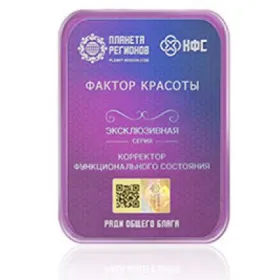
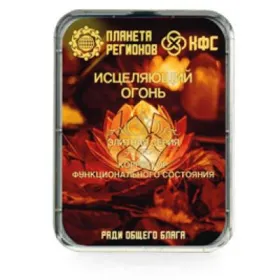
Methodology of using CFS in women with menstrual dysfunction
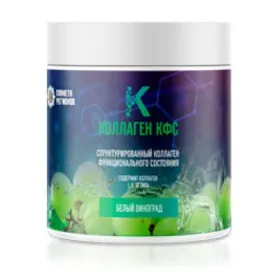
Intake of structured CFS water in the amount of 30 ml per 1 kg of weight per day
Water procedures with structured CFS water
Restoration of the body's energy state by pumping the musculoskeletal system, energy centers of the body
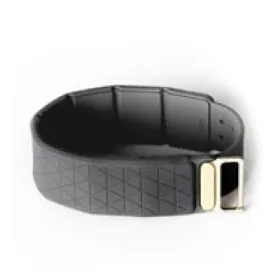
Wear CFS on the problem place, periodically changing the place of location
Influence of CFCs on biologically active points of the body (BAT)
Methodology of using CFS on biologically active points of the body (BAT). The effect of CFS on BAT was carried out taking into account the cyclic influence of the autonomic nervous system (VNS) on the regulation of the menstrual cycle. This technique consists in the use of tonic points, guide points, points of agreement and lo-points located on the yin meridians (yin) in the follicular phase of the menstrual cycle, and the use of BAT of the yang meridians (yang) in the luteal phase of the cycle. Points of local influence were also used.
The procedure was carried out from the 1st to the 14th day of the menstrual cycle using BAT of the Yin meridians, from the 15th to the 28th day, BAT of the Yang meridians was used. Ultrasound control of the development of follicles was carried out, detection of the dominant follicle in order to diagnose expected or completed ovulation and the state of the endometrium.
Tab. 1. Use of CFS depending on the phase of the menstrual cycle and the time of day in case of menstrual dysfunction.
In the case of ovarian dysfunction of central origin, such as anovulation, with a violation of menstrual function, such as opsomenorrhoea, the following methods of using CFS are recommended:
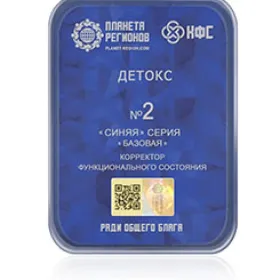
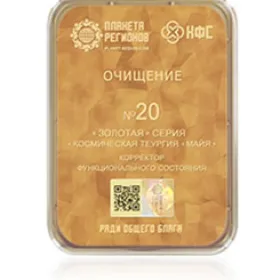
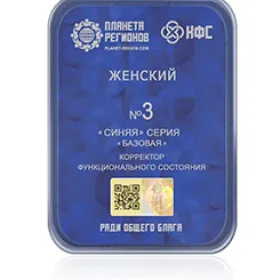
CFS No. 2 - under the back of the head and CFS No. 3/8 - on the area between the eyebrows (5-10 minutes per day)
KFC No. 13/15 - on the area between the eyebrows
Punching a "cap" using several CFS of the "blue" series
Results. The evaluation of the clinical characteristics of the menstrual cycle and complaints presented by patients 3 months after the start of therapy showed the following results.
Complaints of opsomenorrhoea remained in 15 patients (23.8% - 11 people and 4 people in the 1st and 2nd groups, respectively)
The regularity of the menstrual rhythm was noted by 48 women (76.1% - 32 people and 16 people in the 1st and 2nd groups, respectively), which demonstrates the comparable effectiveness of the complex therapy with the inclusion of CFS for this symptom, as well as its advantage over drug therapy
All patients in the main group (with CFS) noted subjective improvement, while in the comparison group only 4 out of 21 patients noted improvement, which indirectly reflects the greater potential of CFS influence on the general state of the body of women
Reduction of pain during menstruation was noted by all patients of the main group and 15 patients of the comparison group (23.8%)
Dynamic ultrasound monitoring of the endometrium during observation and treatment revealed certain patterns. Initial monitoring showed similar endometrial maturation disorders in all groups before treatment.
A significant increase in the thickness of the endometrium in the proliferative phase of the cycle compared to the initial indicators was noted after the therapy already in the 3rd month of observation in the patients of the main group. While drug therapy did not have a significant effect..
Evaluation in the secretory phase of the cycle did not reveal a reliable positive trend in the patients of the comparison group, while in the patients of the main group, a reliable increase in endometrial parameters was recorded compared to the initial value.
A similar picture was observed in the main group of patients with menstrual dysfunction according to the type of opsomenorrhoea, accompanied by anovulation. According to ultrasound, dynamic folliculogenesis with the appearance of a dominant follicle in the periovulatory period was noted in 85.7% (36 out of 42 people) of patients in the main group. In the comparison group, this indicator was registered in 39% (8 out of 21) of patients.
A positive effect was observed regarding the indicators of the immunohistochemical examination of the endometrial biopsy: the presence of secretory changes in the luteal phase of the cycle and an increase in the receptor apparatus of the endometrium in 80.9% (34 out of 42) of the main group of patients with CFS. In the comparison group, secretory changes of the endometrium and an increase in the percentage of hormone receptors were observed in 28.5% (6 out of 21).
Conclusion. The use of CFS in the therapy of correction of menstrual function disorders such as opsomenorrhoea is a highly effective addition to treatment and helps to avoid complications from medical polypharmacy with hormonal drugs.